

How Soil Conditions Contribute to Crane Tip-Overs
May 2, 2026
General Information, Ground Conditions, News
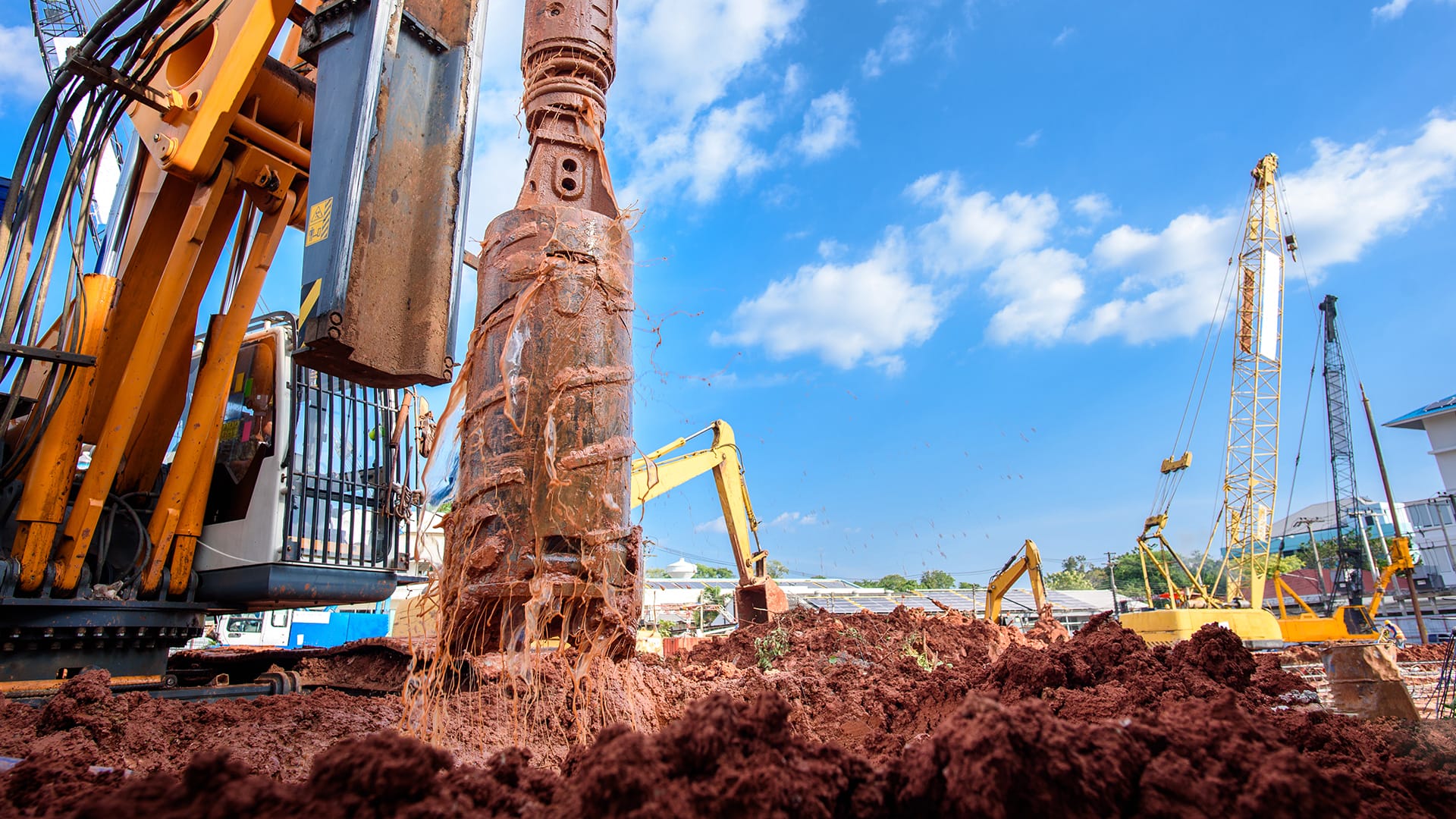
Ground failure remains one of the most overlooked contributors to crane accidents, but it is one of the leading crane tip-over causes.
Even stable-looking soil can:
- compress under-sustained load
- shear under lateral force
- collapse over buried voids
These failure modes often occur without warning—leading to sudden, dangerous tip-overs.
Soil Bearing Capacity Overview
Understanding soil bearing capacity is critical when evaluating crane tip-over causes, especially in conditions where ground stability is uncertain. Different soil types support vastly different loads:
| Soil Type | Approximate Capacity |
|---|---|
| Gravel | 3,000–4,000 PSF |
| Clay | 1,500–3,000 PSF |
| Saturated Soil | 500–1,000 PSF |
Without sufficient pad area, even moderate cranes can exceed these limits. Industry guidance from DICA emphasizes that increasing the load distribution area dramatically reduces failure risk.
Prevention Strategy
Reducing the risk of crane tip-overs starts with proactive ground assessment and proper equipment selection:
- Increase pad surface area
- Use mats for soft conditions
- Reassess after rainfall
- Avoid trench lines and recent backfill
Taking these steps helps ensure that the ground beneath your crane is as reliable as the machine itself.
Conclusion
Too often, failures happen not because of operator error or equipment malfunction but because the supporting surface is not properly evaluated or reinforced. With the high loads modern cranes generate, assuming the ground is “good enough” is a risk no crew can afford.
Ground failure is highly preventable. By understanding soil capacity and using properly sized outrigger pads, you can dramatically reduce the likelihood of a tip-over.
Bigfoot Outrigger Pads are engineered to maximize load distribution and provide reliable support across a wide range of soil conditions, helping you protect your crew, your equipment, and your jobsite.
Source
Zhao, Q. (2008). Cause Analysis of US Crane-Related Accidents. University of Florida.