

How to Calculate Ground Bearing Pressure for Crane Setups
March 12, 2026
Cranes, Ground Conditions, News
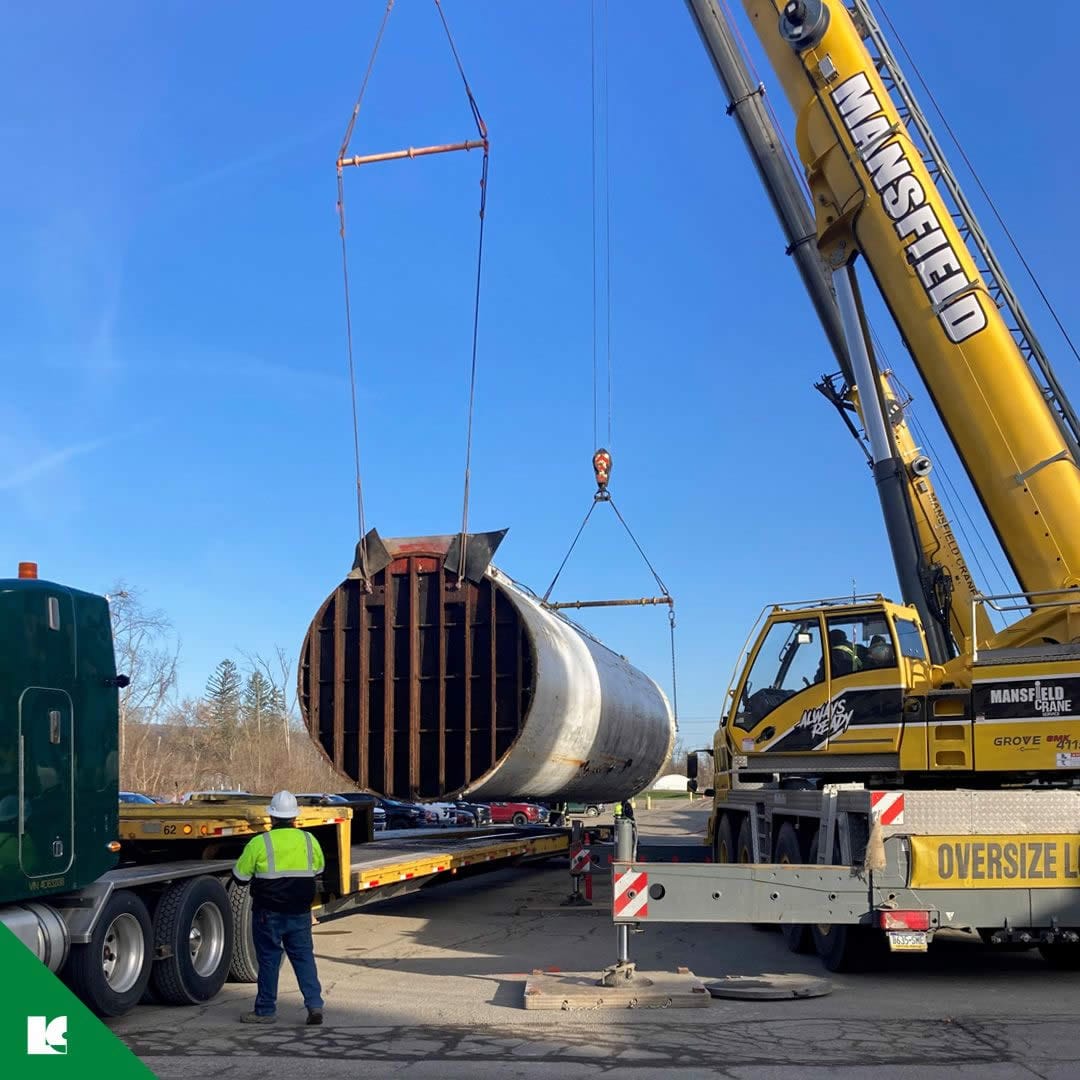
Crane stability begins with the ground. One of the most critical — and frequently misunderstood — elements of safe crane setup is ground bearing pressure (GBP).
When improperly calculated, excessive ground pressure can cause settlement, structural instability, or catastrophic tip-over. OSHA explicitly requires employers to ensure ground conditions are adequate before crane setup under 29 CFR 1926 Subpart CC (§1926.1402) (source: Occupational Safety and Health Administration).
This guide explains how to calculate GBP properly and how outrigger pads reduce risk.
What Is Ground Bearing Pressure?
Ground Bearing Pressure is the amount of force exerted on the soil beneath a crane outrigger, expressed as:
Pressure = Force ÷ Area
If the pressure exceeds the soil’s bearing capacity, failure can occur.
Step-by-Step: How to Calculate Ground Bearing Pressure
Calculating ground bearing pressure helps determine whether the ground can safely support a crane’s outrigger load. The steps below show how to calculate the required pressure and why soil conditions must also be considered.
Step 1: Determine Maximum Outrigger Reaction Force
Consult the crane’s load chart. The highest reaction force often occurs when lifting over the side at maximum radius.
Example:
Maximum outrigger reaction force = 100,000 lbs
Step 2: Calculate Pad Surface Area
If using a 24” × 24” pad:
24 × 24 = 576 square inches
Step 3: Divide Load by Area
100,000 lbs ÷ 576 sq. in. = 173.6 PSI
This means the soil beneath the pad must safely support at least 173.6 PSI.
Why Soil Conditions Matter
Different soil types support dramatically different loads:
| Approximate Bearing Capacity | |
| Compacted gravel | 4,000+ PSF |
| Clay | 1,500–3,000 PSF |
| Wet / saturated soil | 500–1,000 PSF |
Crane accident research has shown that ground instability contributes to a significant portion of tip-over incidents (Cause Analysis Of U.S. Crane-Related Accidents).
Even visually stable ground can conceal:
- Underground voids
- Recently backfilled trenches
- Water-saturated zones
How Outrigger Pads Reduce Risk
Increasing pad size reduces ground bearing pressure exponentially.
For example:
If pad size increases from 24” × 24” (576 sq in)
to 36” × 36” (1,296 sq in):
100,000 ÷ 1,296 = 77 PSI
That is more than a 55% reduction in pressure.
Engineered composite pads distribute load more predictably than wood cribbing, which can absorb moisture and degrade over time.
OSHA Requirements for Ground Conditions
Under §1926.1402, employers must ensure:
- The ground is firm and drained
- Supporting materials are sufficient
- Outriggers are used per manufacturer instructions
Failure to comply can result in citations and substantial penalties (OSHA Subpart CC).
This makes pad sizing not just an engineering decision but a compliance issue.
Common Ground Bearing Pressure Mistakes
- Using average outrigger load instead of maximum reaction force
- Ignoring dynamic loads during swing or boom extension
- Estimating soil capacity without geotechnical data
- Reusing undersized pads across different crane classes
Best Practice Recommendations
- Always calculate using maximum expected outrigger load
- Size pads for worst-case soil conditions
- Increase pad area when working on clay or wet ground
- Document calculations for compliance records
For high-capacity cranes, engineered pads designed for known load ratings provide a measurable safety margin.
Frequently Asked Questions
What happens if ground bearing pressure is too high?
The soil can shear or compress, causing uneven settlement and potential crane tip-over.
How do you reduce ground bearing pressure?
Increase pad surface area or use crane mats to distribute load.
Does OSHA require outrigger pads?
OSHA requires adequate ground support. Pads or cribbing are typically necessary to meet that requirement.
Conclusion
Need help selecting the correct pad size?
Our team at Bigfoot Outrigger Pads can help you determine the proper pad dimensions based on crane class and expected loads. Contact us for a sizing consultation.